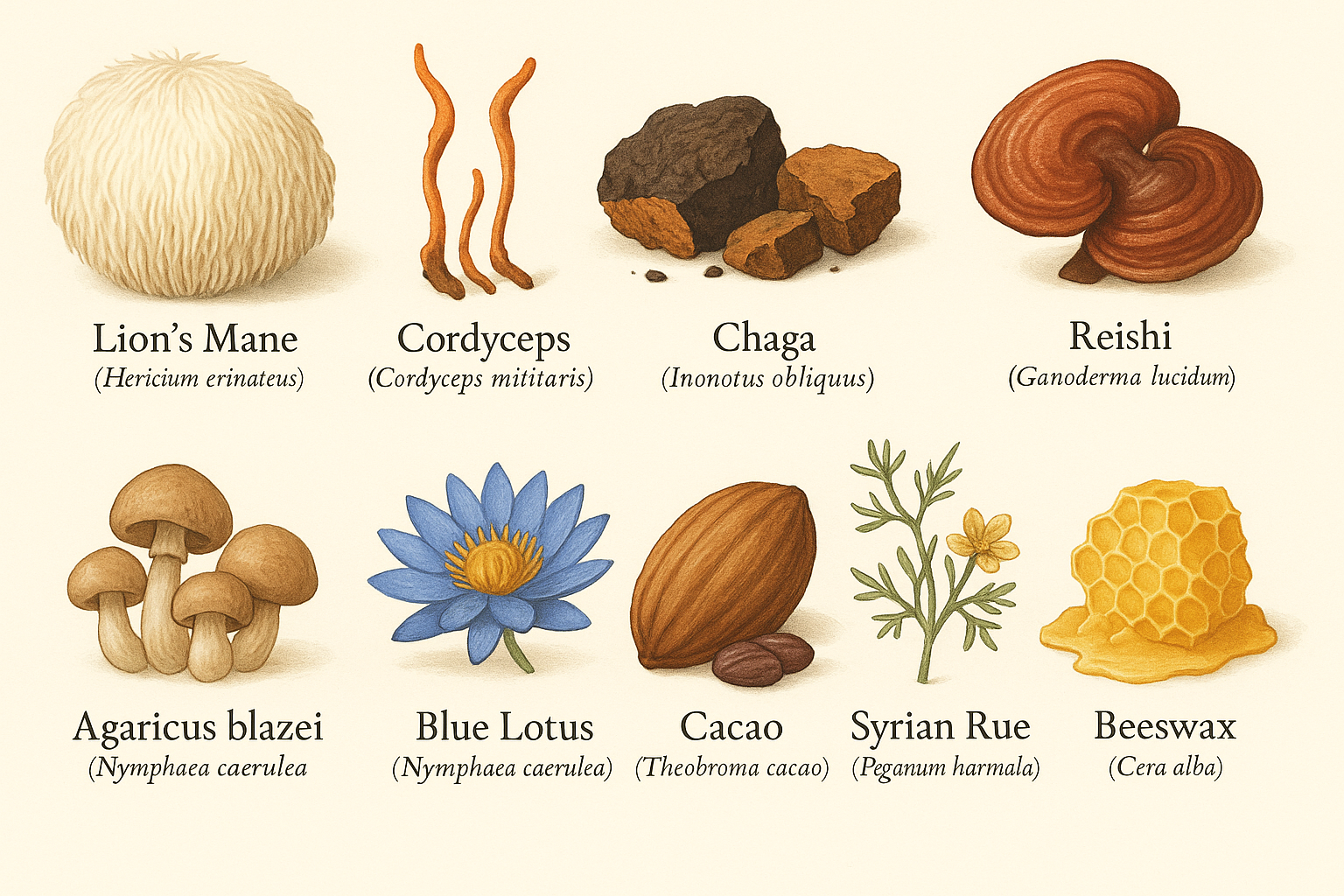


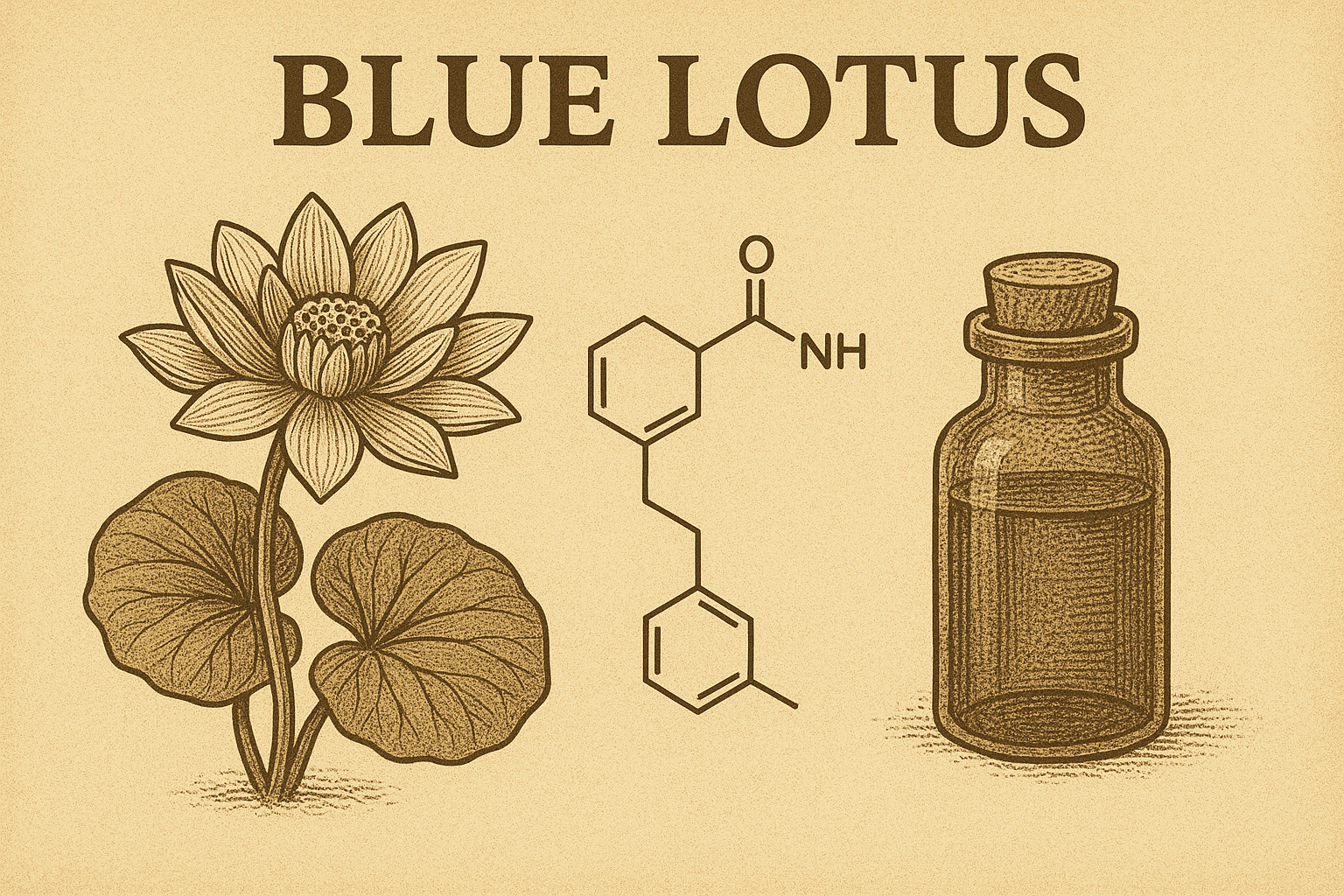
Blue Lotus, the sacred water lily of ancient Egypt, symbolized rebirth and transcendence. Today, its therapeutic facets—relaxation, mild stimulation, and antimicrobial potential—are being revisited through scientific lenses.
Used in rituals, temple offerings, and as a symbol of creation, Blue Lotus held spiritual resonance in ancient Egyptian culture. Its psychoactive properties were intertwined with dream states and inner journeying (PMC10675414, 2023; PMC10609367, 2023).
Modern uses highlight sleep support, anxiety management, and sexual enhancement. Health.com (2025) reports Blue Lotus is psychoactive, with limited scientific consensus. Safety concerns include confusion, hallucinations, or nausea at high doses (Health.com, 2025; PMC5638439, 2017).
A 2023 study in the International Journal of Applied Biology found Blue Lotus extract reduced E. coli‑induced damage to red and white blood cells, suggesting regenerative and antimicrobial potential (IJOAB, 2023).
A 2024 study explored hydro‑ethanolic extracts of Blue Lotus for anticancer effects on leukemia (THP‑1) cells, showing apoptosis pathway initiation. Results remain preliminary (WAOCP, 2024).
Blue Lotus remains a compelling herbal ally—merging relaxation, spiritual resonance, and emerging cellular benefits. Yet, its psychoactive nature and limited clinical data call for mindful, informed use.