

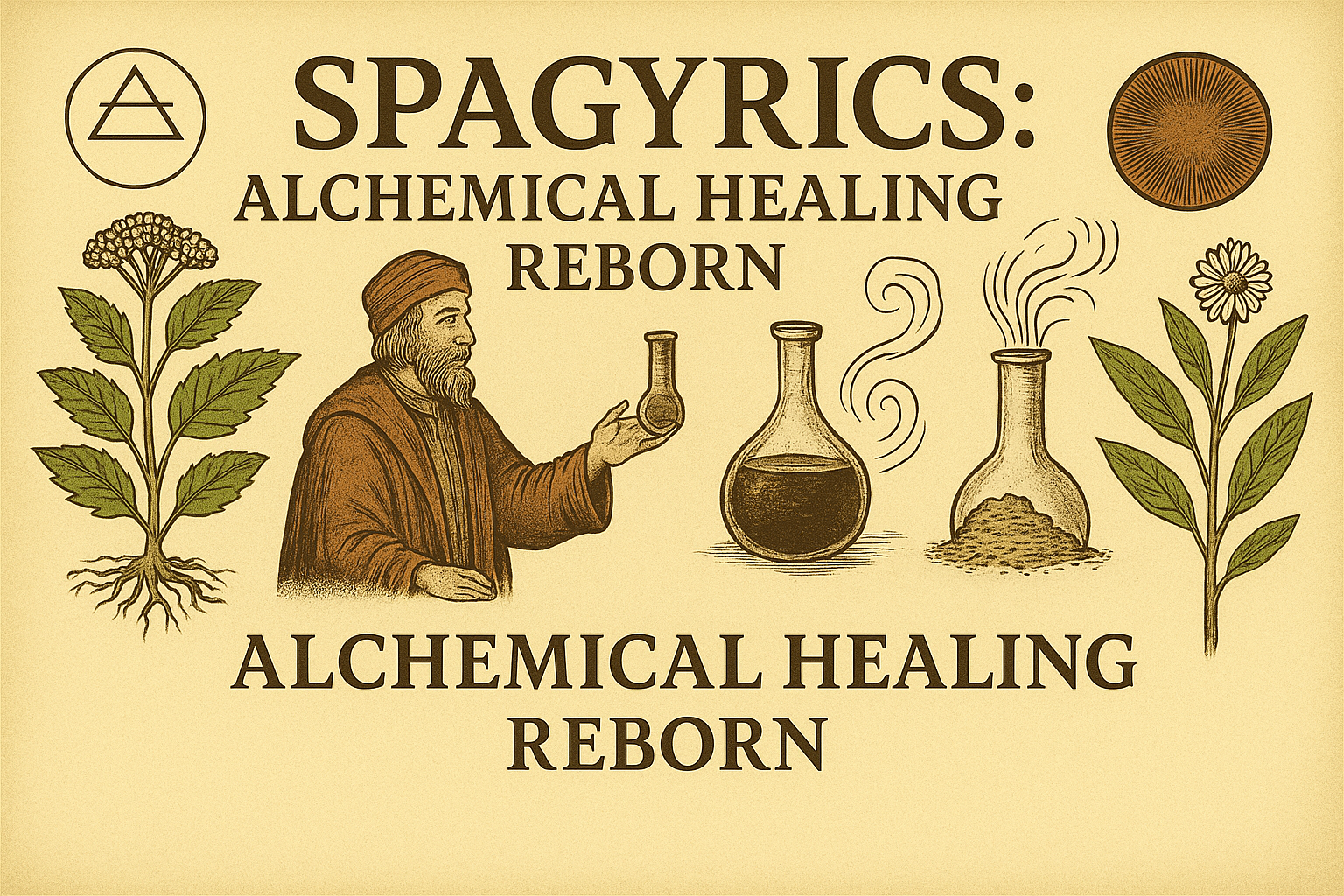
Spagyrics, often called “herbal alchemy,” is a profound healing tradition tracing from ancient Egypt and Hermetic wisdom through the Renaissance. Revived by Paracelsus, a 16th‑century visionary, this method seeks to unite the plant’s physical, spiritual, and mineral essences into a cohesive medicine (Clinical Herbalism, 2020).
Rooted in esoteric lore, Spagyrics draws from ancient practices in Egypt, China, India, and the Unani system—where the alchemical impulse to transform matter was symbolic of transforming consciousness (Honeybee Herbals, 2021). Paracelsus elevated Spagyric methods through separation (extracting oils and essences), purification (calcining plant matter to mineral salts), and reunion (melding essence, oil, salt) to produce a holistic tincture infused with the “body, soul, and spirit” of the plant (NDNR, 2015).
While scientific validation remains limited, contemporary herbalists and alchemists view spagyrics as a bridge between medicine and mysticism—a holistic framework that aligns physical healing with inner transformation (Evolutionary Herbalism, 2020).
Spagyrics invites a radical reorientation: healing is not reductionist, but integrative. Whether harnessed for herbal elixirs, spiritual practice, or ritual intention, this ancient art beckons us toward a medicine that is alchemical at its core.